Showing posts with label JK Rowling. Show all posts

Friday, April 12, 2019

A Dot Labelled "Peter Pettigrew"


(SPOILER WARNING: Obviously, this post contains spoilers for Harry Potter and the Prisoner of Azkaban, and basically all other books/films in the Harry Potter franchise.)

Okay wizards and witches, it's fan-theory time. Today we're addressing that age-old continuity conundrum, "Why didn't Fred and George Weasley notice in their Marauder's Map that there was a little dot labelled 'Peter Pettigrew' following their little brother around and sleeping in his bed?" Fear not, Gentle Readers: I propose a solution which may explain not only this, but other apparent continuity errors as well.

The reason Fred and George never noticed that the little dot labelled "Peter Pettigrew" in Ron's bed is because Peter Pettigrew was not his name at that time.
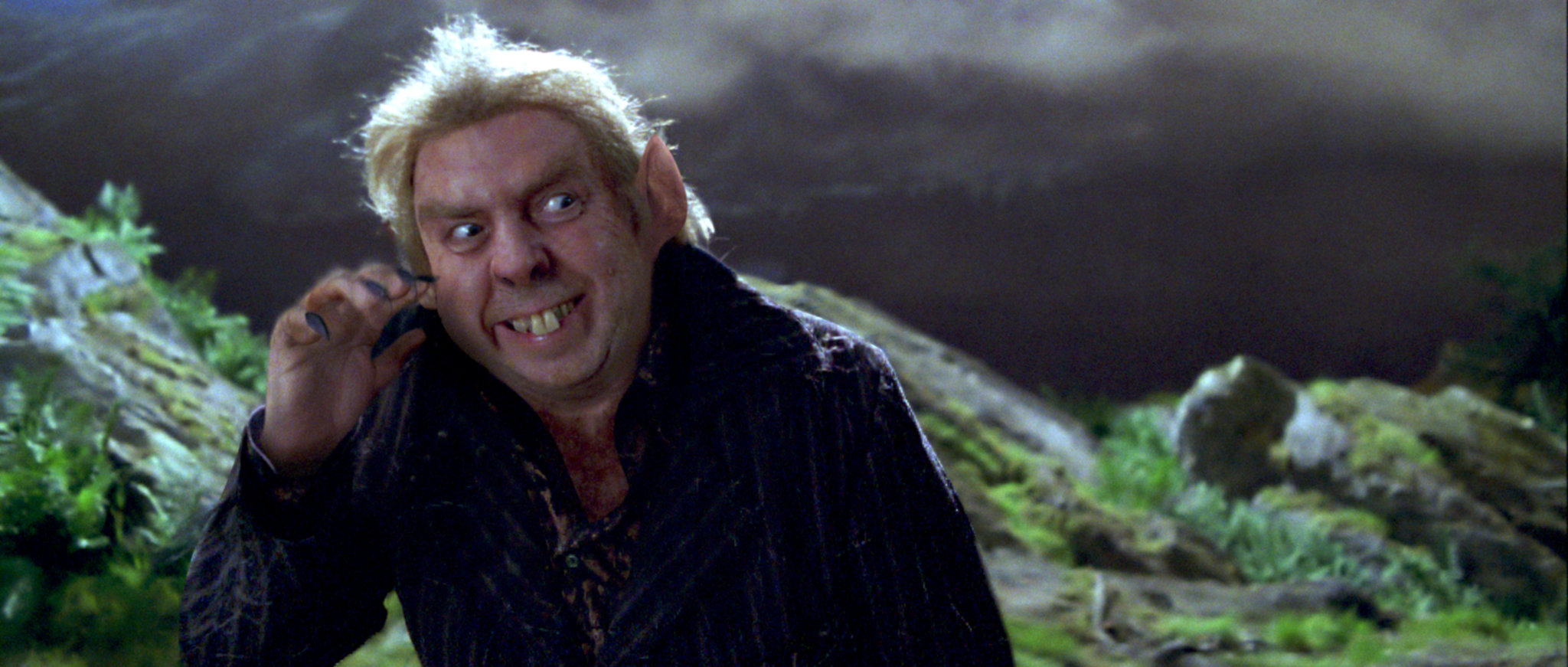
Image result for peter pettigrew
How did that sleazy little creep get Sorted into Gryffindor, though?
After living as a rat for twelve years, Pettigrew was Scabbers for all intents and purposes. No one had called him anything but Scabbers in more than a decade, and as far as we know he had never, in all that time, broken character . It makes sense that he would have come to inhabit the role completely, thinking of himself as Scabbers (if he thought of himself at all, and didn't simply go on autopilot and let his rat instincts take over). But when news of Sirius' escape from Azkaban reached him, something shifted in his little rodent mind, and he began to remember the reason he had been living as a rat for all those years. The guilt came rushing back, and so perforce did the memories of what he had done, why he had hidden for so long.

According to the Marauder's Map Fact File on Pottermore, the Marauder's Map "[s]hows the location of any person or ghost on Hogwarts' grounds, [and] isn’t fooled by an Animagus or an Invisibility Cloak." It says nothing about animals or non-sentient beings, and given that Harry never specifically mentions seeing anything other then humans and ghosts in the map, it's reasonable to assume that the map only shows sentient beings. This makes sense from a user experience standpoint. Think about it: if the map showed every organism in Hogwarts, the interface would be overloaded with useless information about the position of every mouse, spider, and fruit-fly in the castle, making it much more difficult for the user to filter out the important information.

If the above is true (and I'll admit, that's a big "if"), then that also explains why Fred and George never noticed a long thin shape labelled "Slytherin's Monster" slithering through the walls during Chamber of Secrets. Being a non-sentient creature without a unique name that it was aware of, the basilisk thus did not show up on the Marauder's Map.

Image result for peter pettigrew marauder's map

This theory also supported by the movie-only scene in Alfonso Cuaron's Harry Potter and the Prisoner of Azkaban, in which Harry sees a dot labelled "Peter Pettigrew" in the Marauder's Map which is moving towards him down a dark and (apparently empty) hallway. Harry never actually sees Pettigrew on the map in the book, but if we take this scene as canon, it suggests that by this point Pettigrew had started to remember who he was, and the map re-labelled him accordingly.

Now don't worry, I can hear your objections already. "But why didn't the map say 'Helena Ravenclaw' instead of 'The Grey Lady'? Why didn't it show Voldemort standing next to Quirrel?" Both excellent questions, Astute Reader. I shall endeavor to answer them as best I can. First, Helena Ravenclaw did not show up on the map for precisely the reasons mentioned in my theory: she had been known as the "Grey Lady" for so long (nearly a thousand years) that she had internalized the name and considered it her own.

As for Voldemort, I can't say for sure. If the map shows ghosts, then one could reasonably assume that the Dark Lord would show up as well, right? Not necessarily. When Voldemort returns to life near the end of Goblet of Fire, he says to his Death Eaters that when the spell he intended to kill Harry with rebounded, "I was ripped from my body, less than spirit, less than the meanest ghost … but still, I was alive. What I was, even I do not know … "

Whatever was left of Voldemort may have been too little for the map to recognize as sentient, or it may have been masked by Quirrel's life-force. Finally, (and this may be a bit of a stretch), Voldemort is often known as "He-Who-Must-Not-Be-Named", so maybe his name itself was under some sort of concealing enchantment which makes it not show up on all but the most powerful detection systems, sort of like the nominal equivalent of being Unplottable? We know that he has the power to make his name Taboo, so making it Unplottable as well doesn't seem like too much of a stretch.

Though the above theory is obviously not canon, I hope that it can help to clear up any issues you may have had with the illustrious Ms. Rowling's storytelling.

Until next time... mischief managed.


Saturday, September 30, 2017

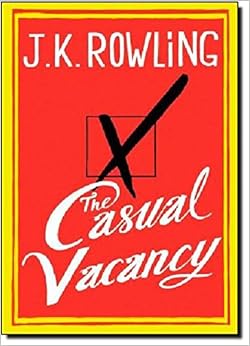
[Book Review] The Casual Vacancy

Image result for the casual vacancy

The Casual Vacancy, by J.K. Rowling
© 2012 Little, Brown Book Group

I realize I'm a few years late with this review, but for a long time I wasn't sure I'd ever read this book. My wife read it when it came out, and she told me the story was so dark and tragic that it'd probably just depress me. I gave her permission to tell me how it ended, and when she told me, I decided that it did sound a lot darker than Ms. Rowling's previous works. But after becoming familiar with Rowling's Cormoran Strike mystery novels, I figured that whatever was in The Casual Vacancy couldn't be any darker than Career of Evil, so I decided to give Vacancy a try.

A lot of readers were surprised and dismayed to discover how grim and pessimistic this book is, despite the fact that Rowling repeatedly stated that this would emphatically not be a novel for children. Vacancy is an unflattering portrait of humanity at best, and a disturbing tour of human misery at its darkest (it's never lurid, though -- Rowling simply reports on her characters actions without judgment, for the most part).

The novel tells the story of a fictional West Country village named Pagford, which is a satellite of Yarvil, a nearby urban center. The two municipalities are separated by a country estate, a previous owner of which sold some land to Yarvil, which they developed into a housing project called "The Fields". This greatly upset the citizenry of Pagford, since the land on which the Fields were built was part of Pagford Parish, meaning that Pagfordians were on the hook financially for the crime-ridden, ugly, and squalid Fields and the families (including many drug-users and welfare-recipients) who live in its squat, ugly cinderblock houses.

Vacancy opens sixty years after these events, with the sudden death by aneurysm of Pagford Parish Councillor Barry Fairbrother, leader of the small-but-vocal faction of the parish council who are in favor of keeping the Fields as part of Pagford Parish. Having been born in The Fields and bootstrapped himself into a position of respect and power within Pagford, Barry was a living example of the narrative which he hoped to make reality for others from The Fields. Unfortunately, his death leaves an empty seat on the Parish Council, which the anti-Fields faction hopes to fill with one of their own.

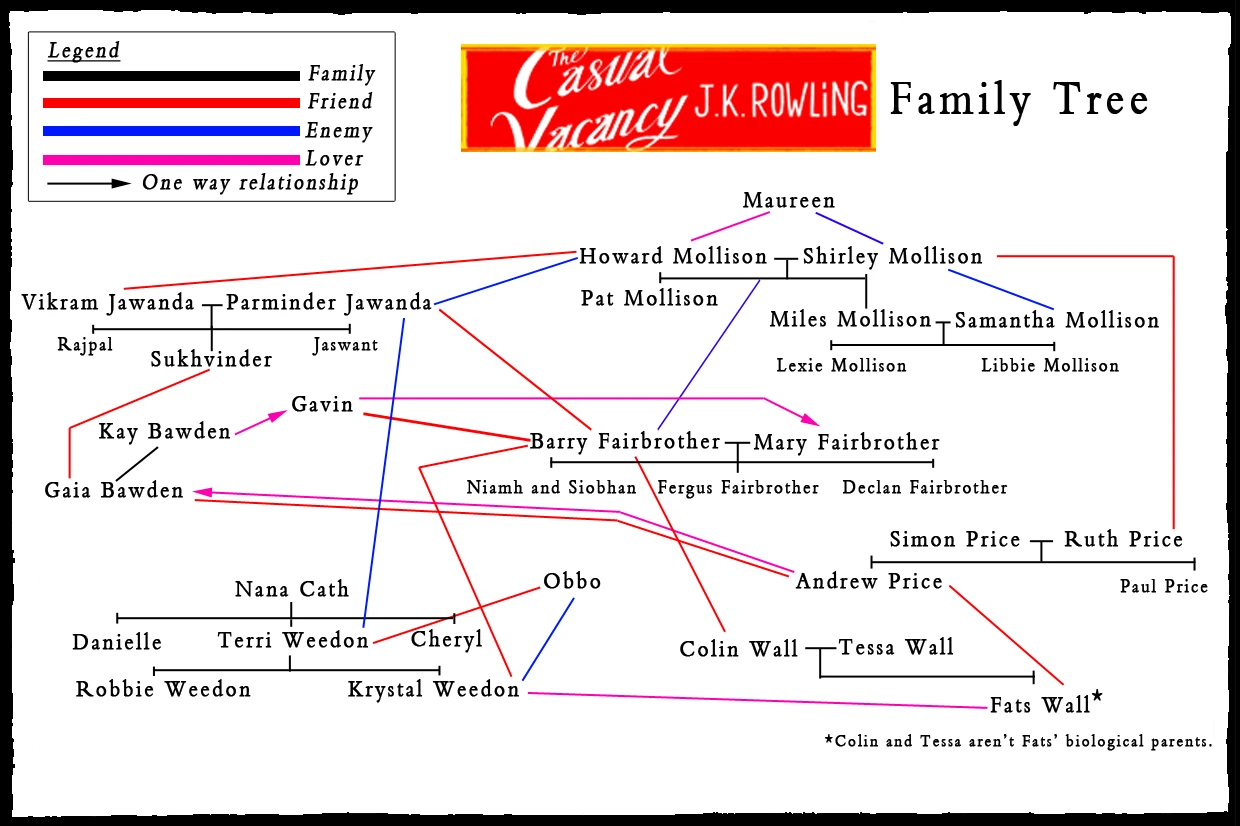
The novel's main arc tells the story of the election which is held to fill Barry's empty seat, but it also zooms in on the petty rivalries, domestic unhappiness, infighting, and class-warfare which plague the picturesque Pagford. I won't attempt to explain all the characters and their relationships herein; that task would be better-suited to a spoileriffic character-map like this one. All you need to know going into it is not to worry if you can't keep all the families straight in your head; by the start of Part 2, you'll pretty much know who everyone is and who they're related to.

I was impressed at how scrupulously Rowling avoided making even the most sympathetic characters into paragons of virtue. It would have been easy for the author to (for instance) cast Dr Parminder Jawanda, the discriminated-against Sikh physician, as a poor unfortunate who is unfairly judged by the backwards inhabitants of Pagford -- but Rowling resists such temptation. Parminder is relentlessly critical of her youngest child Sukhvinder, a fact which (combined with her poor academics, obesity, and the relentless teasing she endures at school) drives the poor girl to self-harm, unbeknownst to Parminder.

For that matter, the children of Pagford are hardly paragons of youthful innocence. In fact, you could argue that most (or even all) of the truly tragic stuff that befalls Pagford during and in the wake of the election is their fault). Once one kid gets it into his head to post damaging information about his father on the village council forums under the username The_Ghost_of_Barry_Fairbrother, before you know it, practically all the kids are doing it to sabotage their own parents' chances of winning, with predictably damaging results for everyone in Pagford and the Fields.

I was particularly struck by two things in this novel: the shocking pettiness and cruelty of almost everyone from every social station, age bracket, and walk of life; and almost total lack of honest communication in any given interpersonal relationship. On the one hand, this seems fairly realistic to me, even if it doesn't paint a very flattering picture of humanity and left a bad taste in my mouth. On the other hand, it made me very, very glad that I escaped from high school with a shred of my human decency intact.

Overall, The Casual Vacancy is not an easy read, and will likely leave you feeling drained and discouraged about humanity in general. But it's also a novel which taps into the primal tribalism which continues to stifle progress and meaningful debate on both sides of the Atlantic, and as such, is a novel which I strongly recommend to pretty much everyone who has strong opinions, one way or another, on the subjects of drugs, poverty, the welfare state, and man's responsibility (or lack thereof) towards his fellow man.