Showing posts with label vampire. Show all posts

Friday, March 9, 2018

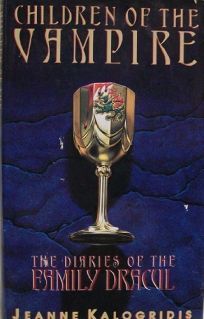
[Book Review] Children of the Vampire

Image result for children of the vampire

Children of the Vampire, by Jeanne Kalogridis
(The Diaries of the Family Dracul, Book Two)
© 1995 Delacorte Press

After finishing the the first book in this series, the deliciously-disgusting and deeply disturbing Covenant with the Vampire, I was eager and excited to dive into this sequel, which picks up mere hours after the first entry left off. Unfortunately, despite a very strong opening and a taut overall construction, I found that my eagerness for more information on the origins and nature of the infamous Count Dracula was hampered by lopsided dramatic structure, and the introduction of several new elements which I personally find incongruous with the Dracula mythos, and with vampires in general.

[Obviously, this being the second in a series, reviewing Children of the Vampire will entail spoilers for the ending and major plot developments of the previous book, Covenant with the Vampire. Consider yourself forewarned and forearmed.]

Children begins with an excerpt from Covenant: two diary entries which explain Vlad Dracul's origin as strigoi, the true natures of his no-less-than three secret covenants — one with the townsfolk who provide him with victims, one with the eldest male of his mortal descendants who disposes of his victims' bodies to prevent them from rising as undead, and one with the Devil himself (the details of which are as-yet unknown). As Arkady's (now-undead) sister Zsuzsanna explains, "The soul of the eldest surviving son of each Tsepesh generation: that is the gold with which he purchases his immortality." 


As I've stated previously, the opening of Children is highly compelling, beginning with a description of Arkady's first, doomed attempt to slay the monster who made him one of the undead at the end of the previous installment. This is honestly one of the finest bits of exposition I've ever read, and it beautifully illustrates the ungodly strength against which Arkady has arrayed himself. I'm going to quote at length from this passage, because it's just. That. Damn. Good.
          I leapt at him with the stake, aiming to plunge deep it into his chest. As I did so, he stepped aside with supernatural speed and grace—and caught the hand that held the stake, with such might that my arm was pulled from its socket.
          I howled, tried to wrest free, but his strength outmatched mine tenfold; with a brutal yank, he tore the arm from me, leaving my shoulder a stump that spewed my latest victim's blood. As I watched, stunned, he tossed it
—the fingers still clutching the stake—with casual grace into the fire.
          But I too was no longer mortal; so, neither, was my wound. The pain blinded for one brief brilliant instant, then transformed into pure energizing rage. Again I charged
—this time knocking V. into the flames.
          As he struggled to rise, hair and waistcoat ablaze, I retrieved my severed limb
—only to realise, with amazement, that another had instantaneously and completely regrown to take its place. I snatched the charred stake from my erstwhile fingers and, oblivious to its blistering heat, rushed with it at V.
          To my surprise, he spread his arms in welcome, a smouldering, willing target that wore the Devil's own grin. I struck out with every shred of my newfound immortal strength, determined to drive the stake clear through his cold heart; struck out again. Again. Again.
          The stake would not pierce him.
          Like a madman, I flailed at him with it
—but it was as though the very air itself formed an impenetrable cushion above his chest. I hammered away until the wood itself began to splinter. All the while, he laughed, soft and low, with the condescension of an adult watching a helplessly furious child; but them his amusement faded and turned to murderous fury.
I know, right?

After his abortive attempt on Vlad's (un)life, Arkady lays low in Vienna for a while, until he gets a visit from his dear old sister Zsuzsanna, who shows up with two drunken victims as a peace-offering. She instructs her brother in the subtle art of seduction, but the scene turns horrific when Arkady realizes that she's used her vampiric mesmerism (and the heady rush from feeding off a pair of wine-sops) to trick him into having drunken sex with her, his own sister! 
b
EEEEEUUUUUGHHHH!
After this abrupt splash of cold water on what had been an entertaining scene which walked the fine line between horror and voyeurism, we're told that Zsuza transgressed this most ancient of boundaries in the hopes of conceiving a dhampir: apparently in this mythos (and real-world Slavic folklore), vampires retain the ability to reproduce during their first year after being turned. This seems like a big change to the generally-accepted rules of vampirism, but I was willing to let it slide if the author could to something interesting with it. Unfortunately, she never does. That's right, Ms. Kalogridis just blue-balls her readers purely to fuck with us, because nothing ever comes of this development! Zsuza does not conceive, and asides from establishing that she really regrets never having children of her own while she was alive, the whole incest shocker contributes nothing to the overall plot! The author could have just had Zsuzsa say "I really regret not having kids while I was alive", she didn't have to set us up with erotic expectation and then shove a steaming platter of incest in our faces!

I mean really, who does that to their readers?

Anyway, Zsuzsa tells Arkady he's not strong enough to challenge Vlad (duh), but he can get stronger by training at the Scholomance, a school for the black arts that's hidden somewhere in the Carpathian Mountains. Off he goes into the wild black yonder, and the story jumps ahead twenty-six years to Amsterdam, where Mary Windham Tsepesh (now known as Mary Tsepesh Van Helsing) has just buried her second husband, the kindly doctor who helped the Tsepeshes to spirit away their infant son Stefan from Vlad's clutches at the end of the last book. It kind of bothered me that the good doctor went by the assumed name "Dr Kohl" while travelling to Castle Dracula in the last book, instead of just using his real name. Seems like a cheap way of ramping up tension, by revealing that he was hiding his identity for no discernible reason.

Overall, the novel's dramatic structure feels lopsided. The climax is only two-thirds of the way through the book. Despite its power (and there is a revelation which turns the entire plot of the novel UPSIDE DOWN!), the fact that the denouement is SO LONG makes this climax seem anticlimactic, even though in the strictest sense, it isn't.

I guess I'm feeling a little trepidation that so many seemingly disparate elements have been introduced, but still intrigued enough to see where the final installment takes me. The friend who loaned me the series said she didn't remember much about the second book;; it's the first and the third which stand out in her memory. Home fully that's a sign of good things to come. As always, I'll let you know how it all turns out, Dear Readers.

Tuesday, October 12, 2010

Movies To Avoid: "Dracula" (1931), starring Bela Lugosi

The other day, inspired by the approach of All Hallows' Eve, I had a desire to watch a horror movie. Lacking both money and a library card (I know, I know!), I decided to search you Tube for Bela Lugosi's world-famous 1931 performance as the infamous Count.

I have to say, was deeply disappointed. It started pretty early on; the acting was stilted and awkward, but that was only to be expected. After all, audiences back then expected something very different from their actors than they do today.

The first thing that jerked me out of the experience was the scene in which we first see Castle Dracula, and its inhabitants, both living and undead, which includes spiders (duh),bats (naturally), an opossum (Umm, okay...) and a nest of armadillos (WTF?!). It's like they didn't even think to research what kind of animals live in Europe, or that they might be different from the ones that live in California.

Speaking of uncertain locations, only about half the cast had English accents, despite the fact that the film was set in London, England. One particularly memorable performance, by Charles K. Gerrard, has one of the most gratingly fake Cockney-esque accents I've ever heard in my life. Furthermore, his character, Martin (a guard at Dr. Seward's sanitarium) is entirely useless as both a person and a character. He lets Renfield escape from his cell on several occasions, and is entirely ineffectual at restraining him. Also, his endless interjections ("'E's croizy! Comploitely looney!") are, as a rule, glaringly obvious, and largely ignored by the other characters.


Furthermore, Dracula's facade of normality is so laughably flimsy that it's a wonder that his own wives don't take him out, for his numerous and flagrant violations of the Masquerade. I mean, he doesn't make even the slightest attempt to hide what he's doing, and practically announces his next victims in public. It's a shock that it took Dr. Van Helsing himself to even notice that something wasn't quite right with this Dracula fellow.

Overall, the film entirely lacked any power to frighten, horrify, disgust, or even intrigue any modern viewer. I have a hard time believing that anyone was ever frightened by it. And don't give me any of that "It was a different time" crap! H.P. Lovecraft was still making a name for himself while this was being filmed, and his stories still scare the bejeezus out of me! And eighty years previous, Edgar Allan Poe penned The Tell-Tale Heart, one of the creepiest stories ever written in English. Hell, even Shakespeare told a few good ghost stories in his time. It's not as if no one had ever frightened an audience before 1931.

If you want a scary, classic vampire movie, watch F.W. Murnau's Nosferatu. If you insist on knowing how this movie ends, watch Bram Stoker's Dracula instead. It's got basically the same plot, and it does what it sets out to do (i.e., it's actually scary) which is more than Tod Browning's film can say.

Friday, August 20, 2010

The End of the World


Yesterday morning, at about 8:00 AM, the series finale of The Masks of the Damned came to its long-awaited conclusion. The final episode clocked in at just under 12 hours. That's way too long for any TV show, even a long-running soap-opera, but it's not an unheard-of length for a tabletop role-playing game. Which is what it was.

For almost exactly one year, The Masks of the Damned has been a collaborative effort in group improvisational storytelling, and the brainchild of my good friend and former roommate Ian Murray. Ian will shortly be leaving for grad school in Buffalo, New York, which is why the series had to come to an end.

But what an end it was! Nothing else can come close to the nail-biting intensity of a long-running RPG's final session, partly because the viewer can't just sit back and watch how things will unfold. If you make the wrong move, it could spell doom for not just your beloved character, but all other viewers as well (and by extension, their characters, too). Audience-involvement is a must.

For those of you who don't know, The Masks of the Damned utilizes White Wolf's Dark Ages: Vampire setting, and takes place in medieval Krakow, in (roughly) the Year of Our Lord 1230. Not many people know this, but at that time, Krakow was something unheard-of in medieval Europe: a democracy. Granted, it was democratic only for a small group of powerful noblemen and landowners, but it was a step in the right direction.

Anyway, at the opening of the final night's chapter, the city had been under siege by Hungarians for about a week, taking heavy losses by night when the invaders' vampiric masters awoke, and laid their own siege with Tzimisce [chim-EET-see] war-ghouls. In the midst of a major battle, Nicodemus, the former ruler of vampiric Krakow, reappeared and announced that he had come to reclaim what was rightfully his. Instantly, the city began to tremble, and a titanic dragon erupted from beneath the royal palace: a dragon formed of thousands upon thousands of human corpses, bound together and given an unholy life by blasphemous magics. The beast raced with shocking speed to the Eastern Gate, preparing to smash the city walls and allow the Hungarians access to the defenseless, sleeping city.

I don't think I've ever heard of a more epic final battle, which took place on the dragon's freaking back as it raced through the city. Imagine the final battle in Army of Darkness, but instead of taking place in a castle, it takes place ON GODZILLA'S BACK, WHILE HE'S IN THE PROCESS OF DESTROYING TOKYO!!!

During said battle, the fighters held their own against a powerful Tzimisce named Lazarus, who wore a suit of armor made from his own skeleton, and dealt unhealable damage! Oh yeah, and he could fly. Meanwhile, the weak-armed mages (i.e., just me) attacked the beast's weak points with burning barrels of tar, trying to cripple its' legs before it could crush the rest of the city.

Oh, and did I mention that, for all intents and purposes, the dragon had INFINITE HIT POINTS!?!?!?! And that it was almost ONE-HUNDRED FEET TALL at the shoulder?!?!?! And that as you climbed us its body, the uncountable hands and mouths of all those corpses would bite and rake and claw at you?!?!?!?!

It was an epic battle to end all epic battles.

But then came the True Final Boss!

I believe I mentioned earlier that Nicodemus, Krakow's former ruler, had returned? Well, we had to fight him. Immediately. He made a brutally difficult boss: he was older than dirt, he could fly, cast tons of magic, turn himself into a gravity-defying puddle of blood, use telekinesis, fill entire rooms with nigh-impenetrable darkness, hold hundreds of gallons of blood in his body, and knew a spell that could collapse people's skeletons at will!!! For a mortal, having your ribcage collapsed would be instantly fatal. For us, it just made us loose half the blood in our bod-- Oh, wait. When you're fighting someone tougher than the fucking Antichrist, loosing half your ammo is pretty much fatal, too.

Normally, a boss like that would be incredibly difficult, if not impossible. But do you remember how, mere minutes previous, Lazarus dealt most of us a ton of unhealable damage? Things were not looking good for the heroes of Krakow.

It was only in the last minutes, hemmed in, badly wounded, low on blood, and still unable to deal a single point of damage, that we came across a possible solution: Wolfgang (my character) still had a dagger on his person. A dagger with a spring-loaded poison chamber. A poison that had proved devastating to vampires in the past. I drew it from my pocket, and checked how much ammo it had.

It had one. dose. left.

Using my own limited flight powers, I took to the air and made a final desperate stab at the seemingly-invulnerable Elder Vampire. I rolled a seven. If that result had been one point lower, we all (probably) would have died then and there. (Which is not to say that I was the only one pulling my weight in the life-saving department; every character had more than a few brilliant ideas and close brushes with Final Death. This particular one just happened to be mine.)

With the successful application of the poison, Nicodemus was badly hurt, and we were eventually able to subdue him. The Page (an extremely powerful child-vampire of indeterminate gender) who had been sitting in his/her/its throne and watching the battle, congratulated us on our unlikely success, but reminded us that, in becoming the rulers, heroes, and villains of Krakow, we had nothing left to do but train our replacements, and know that one day, we too would be overthrown.

'Twas a very bittersweet ending, but what else can one expect from the chronicles of the Living Damned?

Heere endeth ye tale of Ye Masques of ye Damned.

P.S. IAN, WE WILL MISS YOU!