Showing posts with label horror. Show all posts

Sunday, January 7, 2018

[Book Review] Covenant with the Vampire

Related image

Covenant with the Vampire, by Jeanne Kalogridis
(The Diaries of the Family Dracul, Book One)
© 1994 Dell Horror

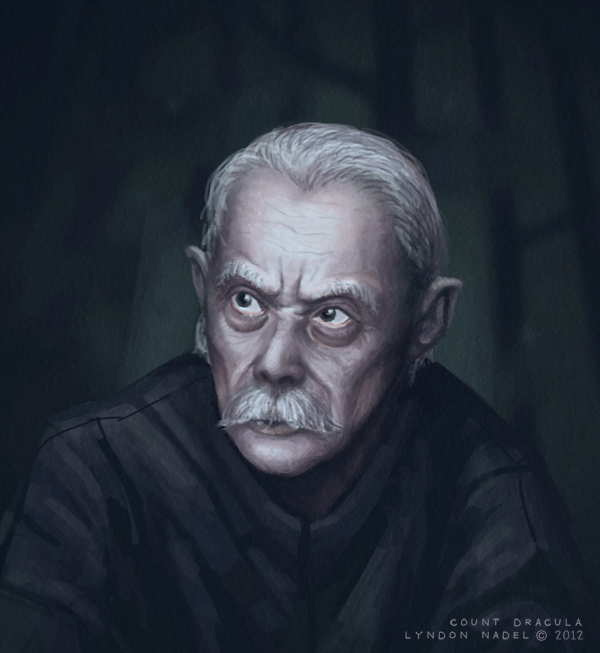
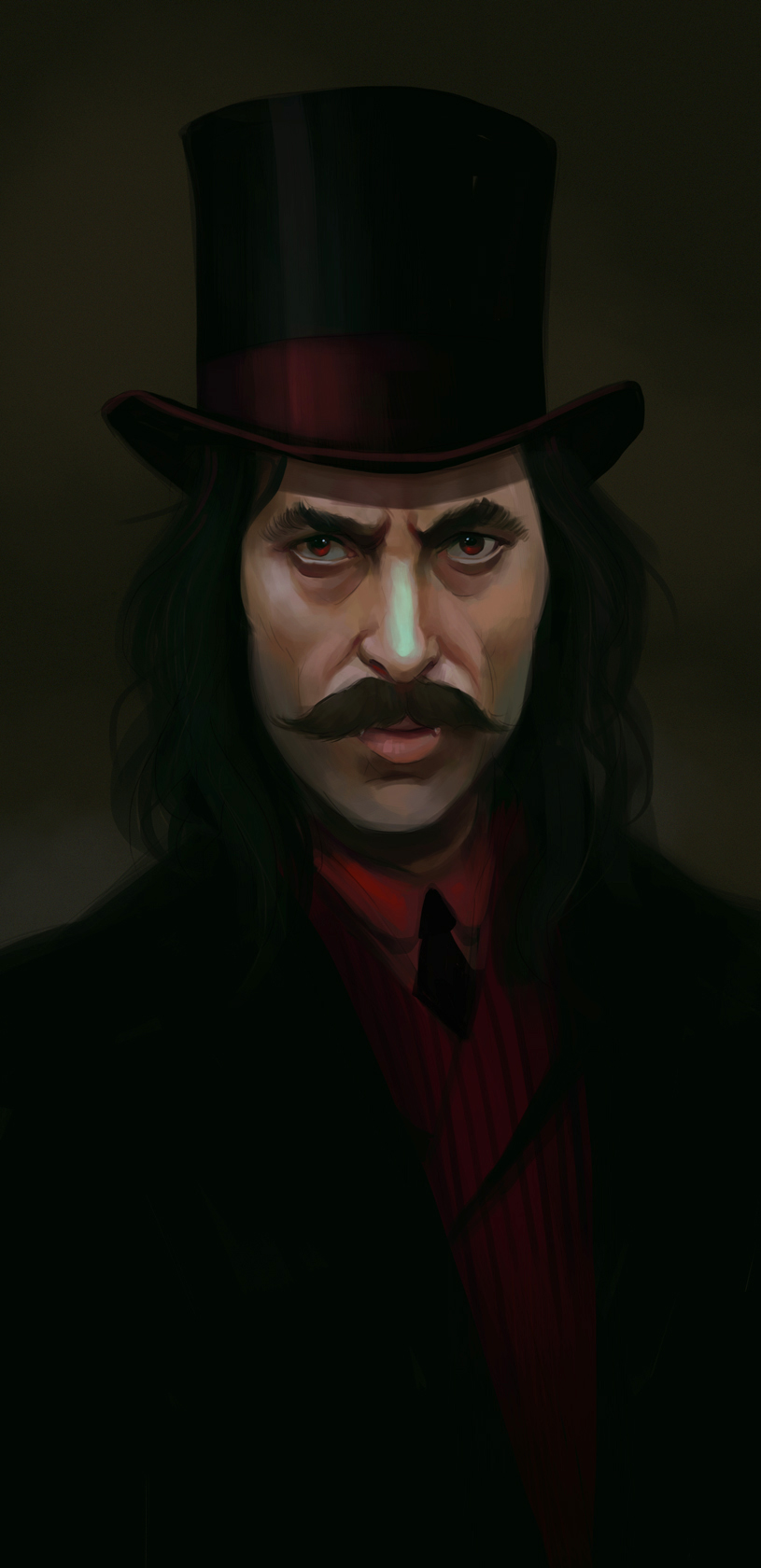
It's been a long time since I read Bram Stoker's Dracula, but this prequel, set fifty years before the events of that tale, brought back to me with vivid clarity the creeping dread and shocking horror of the Dracula mythos. Part of Dracula's allure is his ambiguity, his inability to be defined, the impossibility of pinning down exactly who -- or even what -- he is. Is the vampiric antagonist of Bram Stoker's 1897 Gothic horror novel truly the same person as the historical Vlad Tepesh, Vlad the Impaler, or is he just some random undead who's putting on airs? Is he even just a vampire, or does the hair on his palms and his ability to turn into a monstrous wolf make him also a werewolf?

I was a little afraid, at first, that revealing the "origins" of Count Dracula might dampen his mystique. Monsters frighten us because they represent unknown quantities; once you label and categorize them, once you assign them a backstory and a clearly delineated set of powers, they go from terrifying existential horror to monster of the week. Fortunately, revealing some (but not all) of Dracula's origins and motivations does nothing to diminish his power to terrify audiences, at least in this instance.

I was impressed and pleased to discover that Covenant with the Vampire is written, like the original Dracula, as an epistolary novel (or "novel made of letters"), with each chapter taking the form of a diary entry from one of the main characters. This use of multiple viewpoints and voices lends the novel texture, plus credibility as each character's account of events corroborates or expands upon that of the others. It also sets us up for a lot of dramatic irony: being privy to the inner thoughts of each of the main characters, we (the readers) inevitably know more than any one character is ever aware of, which means that we can only watch in mute horror as characters take actions and make decisions which we, knowing better than they, wish desperately to warn them against. The diary-entry format also gives us a sense of immediacy and urgency, as the characters explain to us where and when they are recording their thoughts: on sleepless candlelit nights, on scraps of paper stolen between visits from a nosy sister-in-law, on sunny mornings that make it difficult to trust one's own memories of the night before.

The story begins on "5 April, 1845" as Arkady Tsepesh, last male scion of the family Tsepesh (descendants of the infamous Vlad the Impaler), returns with his heavily-pregnant English wife, Mary Windham Tsepesh, to his ancestral home, Castle Dracula, following news from his deformed elder sister Zsuzsanna Tsepesh that their father has fallen gravely ill. Arkady and Mary arrive mere hours after his father's passing, and it is during the vigil for the deceased that we catch our first glimpse of Great-Uncle Vlad.

As you've probably guessed already, "Great-Uncle" Vlad is really more
of a great-great-great-great-great-great-great-great-great-great-great-uncle.
Over the course of a mere two weeks in the Transylvanian mountains, Ms. Kalogridis ever-so-slowly peels back the façade of normalcy, revealing a world of incest, torture, mass-murder, and of deals with devils both figurative and literal. As Arkady learns more and more of Great-Uncle Vlad's peculiar behaviors and future goals (e.g., moving to England with its "teeming millions"), and Mary begins to listen with increasing credulity to the whispers of the servants, and Zsuzsanna begins to attract -- and even to invite -- the sexual attentions of her wicked uncle, the net which entraps our characters within Castle Dracula and its estate grows ever-tighter. Mary's complicated pregnancy (to say nothing of the castle's extreme isolation and Vlad's increasingly controlling nature) prevents them from leaving freely, and so husband and wife are forced to bide their time and pay homage to a monster in their midst, a wolf in boyar's clothing.

"You look different, Uncle Vlad: have you done something with your heir?"
As Vlad begins to feed with greater regularity, he transforms from a decrepit relic into a terrifying patriarch; likewise, Castle Dracula itself transforms from Arkady's beloved-though-gloomy childhood home to a macabre prison, filled with and surrounded by secrets and death. As Vlad begins to seduce his many-times-removed grand-niece, we are given a firsthand account of what it actually feels like to become strigoi, in all the sensual and incestuous details -- though on a technical note, does it still count as incest if she's eleven generations removed from you? (Actually, don't answer that.)

As Arkady explores the estate and its grounds in pursuit of fleeting glimpses of his long-dead brother Stefan, he makes a grisly discovery in the woods beside Castle Dracula which results in what the old Ravenloft setting would call "a malign paradigm-shift", in which everything he knew, or thought he knew, about his uncle, his family, and the very nature of reality itself comes crashing down around his head. I can't tell you any more without giving too much away, but suffice it to say that if you're a fan of the creepy, the macabre, and the outright horrifying, Covenant with the Vampire will amply satisfy your disgusting predilections (you nasty little pervert, you).

As readers, our foreknowledge of what ultimately happens in Bram Stoker's Dracula -- that any attempts to kill Dracula are doomed to failure, that he must produce at least three "brides" and turn poor, mad Renfield into his creature, that at some point his mortal servants must abandon him and his castle to fall to ruins -- has the effect of producing great dramatic tension. We know that these things must occur in order for Stoker's narrative to make sense, but knowing that the blows must come but not knowing how or when they will fall, or in which order, may be the cruelest torture of all. 

Monday, January 1, 2018

Stranger Things, Season 1 (Netflix, 2016)

Image result for stranger things season 1

Yes, I realize that I'm a little behind-the-times reviewing this one (okay, a lot behind-the-times). In fact, that kind of shock at my total lack of pop-culture knowledge is kind of the reason I watched Stranger Things in the first place. When my brother-in-law realized that my wife (his sister) and I had never seen the show, he immediately went out and bought it for us on DVD as his Christmas present to us. We decided to start watching it on New Year's Eve, but we planned to space out our viewings, only watching one or two episodes a day. You know, in order to really soak it up instead of just bingeing and being done with the whole thing in a day or two.

Turns out, even the idea of stretching it out to two days was some serious pie-in-the-sky thinking. We could barely wait long enough to go to the bathroom between episodes, and waiting to switch in the next disc felt like long-term deprivation. The series grabs you by the balls right from scene one and never lets go, not for a single moment. The whole first season feels like one long balls-to-the-wall thrill-ride (in a good way) interspersed with moments of heart-pounding, tingly-palmed dread (again, in a good way), with an occasional dose of comedy to lighten the sometimes-oppressive mood. 

I won't bother giving you a blow-by-blow of the first episode -- that's easy enough for find online, though I would caution against digging too deeply for fear of spoilers. Instead, I'd rather talk about the show's overall structure, and the various media from which it draws inspiration.

Not pictured: parental supervision.
Stranger Things begins on the night of November 6, 1983, with the mysterious disappearance of one twelve-year-old boy, and chronicles the fallout from this and other paranormal goings-on in the fictional town of Hawkins, Indiana. The cast is divided into three largely-distinct groups (tweens, teens, and adults) who discover/encounter disparate facets of the strange events occurring in their town, but -- like the blind men and the elephant -- none ever have the whole picture (at least, not at first). The result of this splitting-up is to create a narrative which sometimes feels like three separate shows which share a setting and thematic elements, which cross into each others' realms with increasing frequency as the various investigators begin to share information and fit their pieces together. Imagine that Buffy and Angel had been spliced together into a single show and you wouldn't be far from the mark.

Tonally, Stranger Things feels like a mashup of Freaks and Geeks and The Goonies (if they'd both been written by Stephen King, that is), plus a little bit of E.T., John Carpenter's The Thing, pacing and visual elements from Halloween and Nightmare on Elm Street, and maybe just a dash of... I don't know, Akira? Maybe some Parasyte? A bit of Alien and Close Encounters of the Third Kind? Maybe I'm getting too deep in the weeds here, trying to pin down everything the Duffer Brothers referenced. There are no new stories, after all, and it's completely natural for elements of an author's best beloved stories to show up in an author's work. Besides, nostalgic shout-outs must always take a backseat to story and character development.

Related image
You might not be afraid of Christmas lights yet, but you will be.
You will be.
First and foremost, Stranger Things is a scary story, of the type that humans have told around campfires since time immemorial in order to scare the bejeezus out of each other. Throughout the constant twisting and turning of the plot, the falsehoods exposed, the hidden pasts uncovered and dark truths revealed, Stranger Things keeps returning to the time-tested standbys of classic horror: the atmosphere of foreboding, the darkly-hinted clues of a sinister presence, nigh-unbearable escalation of tension, the masterfully-executed jumpscare, and of course, the horrifying reveal. I can't tell you much about what's actually horrifying here, because not knowing is what makes it so damn scary. Much of the supernatural elements of Stranger Things are never explained in full, and the viewer is left to extrapolate and wonder, to think about and to worry, as you turn out the lights and pull the covers up to your chin:

What the hell was it that I just saw? 


Is it really gone, or was it just pretending?

And could it come back?

Pleasant dreams, readers. I'll let you know how Season 2 turns out.

Monday, April 20, 2015

[Movie Review] It Follows


It Follows made it hard for me to fall asleep the night I saw it. Hell, it made me look behind myself more than a few times as I walked back to my car, even in a well-lit parking garage in the heart of downtown Ann Arbor. I think this is mainly because the film feels so familiar and essentially Midwestern, making it much more plausible that this could happen to me, personally. A horror movie set in New York or L.A. could never match It Follows for creepiness, because they could never pass for where I live. This isn't a ghost story that happened in a land far, far away; it happened right here, in these very woods, on a night very much like this one. And the quality of plausibility, the idea that this could happen to you, is what separates a merely spooky story from a terrifying one.

Californians are used to seeing themselves and their neighborhoods in movies, but those of us who grew up in Southeast Michigan have a harder time finding media that accurately represent our home region. In fact, there are only a few big-name films (Gran Torino, Robocop, 8 Mile) and TV shows (Freaks and Geeks, Hung) that spring readily to mind, and even the most recent of these is already four years old.

Because Southeast Michigan movies are such a rare breed, it was somewhat surreal to see teenagers on the big screen that actually looked like my own school-friends, living in houses that actually look like the houses I grew up around. The exterior shots are full of cozy working-class two-stories with white aluminum siding and blue vinyl above-ground pools in the backyard, often installed behind fully separate one-car garages, separated from one another by a grid of chain-link fences . t's all hauntingly familiar to me, which probably explains why I found this movie was so singularly creepy: everywhere in this movie reminds me strongly of places that I've actually lived in or visited with some regularity, from the neat little rows of suburban houses to the pacific splendor of an "up north" cabin to the hauntingly empty shells of burned-out homes and abandoned parks within Detroit itself.

Just try driving past one of these at night,
and tell me it doesn't freak you out. I dare you.

Although the geography of the film is explicit, the time is left ambiguous. The main characters (all in their late teens or early twenties) spend much of the first act lounging in living rooms and basements that look like they haven't been redecorated since the seventies, complete with dark wood-paneling and beige shag carpeting (I think I even saw a macramé owl in the background at one point), but homes that look like this are extremely common in the Detroit area, even today. The kids drive cars that look like they're from the 1980s, but they wear their hair and clothes more-or-less like modern teens and twentysomethings do (though not quite; something's missing, I'm just not sure what). Cell phones never appear, but one of the main characters is repeatedly shown reading Dostoyevsky's The Idiot on a Kindle-esque clamshell e-reader.

The plot of this dark and twisted tale follows Jay (short for Jamie), a freshman or sophomore a local community college, who's been dating an older guy, Hugh, who she's been thinking about sleeping with for the first time. After doing the deed in the backseat of Hugh's hot rod, the young man goes to the trunk to get something while Jay idly soliloquizes, then returns - major shocker! - with a chloroform-soaked cloth which he presses to Jay's face until she passes out. She wakes up some time later, handcuffed into a wheelchair, on a wall-less upper floor of one of Detroit's many abandoned factories. Slowly walking around her, pointing his flashlight out into the night, Hugh explains that something, some unknown entity or person, has been following him for a long time; someone passed it to him through sex, and now he's passed it to her. She can get rid of it by passing it to someone else in turn, but until she does, it will be moving towards her. It only walks, never runs, but it never sleeps, never stops, and only she (or someone whom "it" has pursued before) will be able to see it. No matter what she does or how far she flees, no matter how sturdy the doors she bolts herself behind, it will always be out there, day and night, never stopping or resting, always walking straight towards her.

That's one helluva setup, right? I won't spoil the rest of the movie for you (if you want to know how it ends, look it up on Wikipedia or something), but I can tell you this: I've never felt so uncomfortable while gazing on the figure of an attractive female, mainly because this film is very much aware of the male gaze and how it works, but makes you feel uncomfortable for looking. Jay is definitely sexualized, but it's a kind of coquettish, awkward sexuality that makes me, as a male in my late twenties, feel unsure whether it's OK for me to look or not; this creates tension and cognitive dissonance which reverberates throughout the film.

An example: when Hugh brings Jay home after showing her "it" for the first time, he unceremoniously dumps her on the street outside her home, and zooms off into the night. As her friends rush towards her, the camera affords us a full view of Jay's pink-panty-clad buttocks as she drops to her knees in tears on the front lawn of her parents' home. In another context, this shot would be nothing but empty-headed fanservice, but here it just feels deeply wrong. The audience is made to feel uncomfortable for watching her from this angle while she's having a complete (and totally understandable) emotional breakdown, because there's dissonance between the content of the shot (shapely female buttocks) and the mood (sorrow, vulnerability).

The soundtrack, by Disasterpeace, will definitely be a hit with the hipster crowd. It's all 80s-style 8-bit chiptune synthesizers playing slow, eerie moodscapes, interpsersed with a few high-tension, nerve-janglers. Each piece develops slowly out of layered and riffs, usually with a noticeable echo-filter overlaid. Everything is dark, cold, and minor key, and just as circular/repetitive (in a good way) as the titular it-that-follows. Cold, artificial, unearthly, and highly atmospheric; definitely worth a listen, but only in a well-lit room. Listening to it, I can't help but be reminded of the Lavender Town Syndrome creepypasta that's been passed around the virtual campfires for who-knows-how-long.

I was also impressed with the way the director extracted maximum creep-factor from a minimal special effects budget: since "it" can look like anyone, and changes its appearance to avoid easy detection by its prey, they didn't even need to stick with just one person to play "it". The fact that its appearance changes is key to the story, as well as the overwhelming sense of forebodeing that permeates this film. You find yourself scanning the background every time Jay is in a public space, looking for any extra that seems to be walking towards the camera; we feel distracted and mentally taxed by the need to observe Jay's surroundings, helping put us even more thoroughly in her shoes.

Some critics have been talking about how "it" stands for the relentlessness of urban decay (in Detroit and elsewhere, as the economy limps along and America's preeminence begins to tarnish), but I'm not sure I buy it. The director has said in interviews that he doesn't really care what people think "it" is, as long as they're frightened. Personally, I think that it stands better as a metaphor for STDs (and AIDS in particular), but better still as a parable of teenagers coming to grips with their own looming mortality. As one character says late in the film, quoting Dostoyevsky:

When there is torture, there is pain and wounds, physical agony, and all this distracts the mind from mental suffering, so that one is tormented by the wounds until the moment of death. And the most terrible agony may not be in the wounds themselves but in knowing for certain that within an hour, then within 10 minutes, then within half a minute, now at this very instant—your soul will leave your body and you will no longer be a person, and that this is certain. The worst thing is that it is certain.

...and that's enough to freak anybody out.

Wednesday, November 5, 2014

[Movie Review] The Howling (1981)


[Warning: this review contains mild spoilers, but probably nothing you couldn't have figured out from the fact that it's a 1980s movie about werewolves. There are only so many ways it can turn out for anyone involved.]


The Howling is a good werewolf movie, but the script doesn't really stand up as well as the special effects do. Don't get me wrong though: the fact that the special effects are still creepy and disturbing even today, over thirty years later, shows just how groundbreaking they must have been in 1981. This was the first movie to feature werewolves transforming onscreen, in full view of the moviegoing public, without resorting to what amounts to stop-motion animation of hair being glued to an actor's face and hands. The viewer can, in special-effects designer Rob Bottin's words, "see the body really stretching, the nose breaking and twisting, the ribs starting to burst out."


http://deathensemble.com/blog/wp-content/uploads/2012/04/Bottins-awesome-werewolf-in-THE-HOWLING.jpg
Archive footage from the days before werewolves 
were considered even remotely sexy

The Howling also deserves bonus points for being (the first?) movie to feature werewolves as something other than poor, tortured souls who spend a month or two guilt-tripping themselves over their monthly rampages until a loved one puts them down like a rabid dog. These werewolves are in full control of their transformations (which can happen at any time, including during full daylight), and they never ask anyone to chain them up for the night: in fact, they fully enjoy their condition (going so far as to call it not a condition, but "the Gift"), and they chafe at even the relatively minor restrictions they must undergo in order to avoid detection. As one grizzled old werewolf angrily proclaims, 'humans should be our prey [not our livestock]".

My real problem with The Howling is with the flailing ineptitude of the main female character, Karen White (played by Dee Wallace). For someone who seems so utterly incapable of defending herself, or even standing up for herself, it beggars belief that she would survive as long as she does, particularly when more self-possessed characters bite it before her. She spends the whole movie getting pushed around, threatened, herded, cajoled, frightened, stalked, attacked, and even backhanded at one point (to which her immediate reaction, rather than fighting back or getting angry or leaving, is to collapse on the bed and start crying). I get that it's draining to have to spend eight hours a day in a state of frightened agitation, but Dee Wallace doesn't even convince me that she's scared in a lot of scenes: sometimes, she just looks sad, or like she's having stomach cramps. Maybe if the director gave her something to do besides screaming and crying, his leading lady wouldn't have been so drained by the experience that she'd still have the energy to act.

Pictured: a woman in the grip of utter terror

I realize that The Howling is a product of its times, when people paid for tickets to horror movies specifically so they could see a pretty young woman being menaced by terrifying monsters, but watcing this makes me really appreciate how far we've come in thirty years, and how much broader the range of options are for female characters in general, and for the female protagonists of horror movies in particular.

Tuesday, August 20, 2013

Great Graphic Novels in My Life

Last week, I compiled a list of books which have had the most significant impact on my life and worldview. Like many bibliophiles, a large portion of how I interact with and understand the world has been shaped by what I've read. But reading is only a part of the whole picture, and if picture is worth a thousand words, than any graphic novel is worth at least a dozen books. The image can convey many things that the written word alone cannot, and when the two modes of expression work in tandem, marvelous things can happen.


I would like to present you, Gentle Dear Reader, a few of the graphic novels (and one comic strip) which have had the greatest influence on my worldview, more-or-less in the order in which I first encountered them.

Which comic books would be on your personal list of the most meaningful graphic novels you've ever read? Leave your list below in the comments!


1) Calvin and Hobbes, by Bill Watterson
“Hold it. You know what I'd like to see? I'd like to see the three bears eat the three little pigs, and then the bears join up with the big bad wolf and eat Goldilocks and Little Red Riding Hood! Tell me a story like that, OK?”
― Calvin

These comics are among the first things I remember reading as a child. To my mind, Calvin and Hobbes is without question the single greatest body of sequential art ever assembled. By turns philosophical, hilarious, poignant, and incisively witty, six-year-old Calvin and his tiger-friend Hobbes informed a great deal of how I spent my time as a child. Like Calvin, I was possessed by a great love of nature and exploration, and he inspired me to make many unsupervised trips through forests and go mucking my way along creek-beds, looking for whatever "weird stuff" I might be lucky enough to find.

I also inherited Calvin's disinterest in organized sports (which I carry to this day, though not as fervently as I used to), his love of unstructured learning, and the joy he took in noticing the beautiful details which grown-ups miss.


2) Understanding Comics: The Invisible Art, by Scott McCloud

"Space does for comics what time does for film!"
― Scott McCloud


Unfortunately, one of the views that I absorbed from Calvin and Hobbes was Mr. Watterson's disdain for comic books and graphic novels, which he called "incredibly stupid" (which I feel is a little hypocritical of him, since he wrote comics which were eventually collected and sold in book-format, but that's beside the point).Luckily for me, I stumbled upon a copy of Mr. McCloud's excellent book in the bookstore at Eastern Michigan University, and he immediately blew my mind clear out of the water.

Understanding Comics taught me to reconsider art forms that I had previously written-off, like rap and modern art. It taught me not to confuse the medium with the message: just because comic books have historically been the domain of cheap, badly-written, easily-disposable kiddie fare doesn't mean that all of them have to be, all of the time. What if people had persisted in believing, as they did in Shakespeare's day, that  theater could never be anything more than a cheap, frivolous distraction for the lower classes? Imagine how much poorer the world would be today, as a result of their shortsightedness.


3) Maus: A Survivor's Tale, by Art Spiegelman

“Friends? Your friends? If you lock them together in a room with no food for a week…Then you could see what it is, friends!" 
― Vladek Spiegelman, to his son Artie (age 11)

Maus is an oddity, and not just because it's a Holocaust narrative in comic book format, or because it's a Holocaust narrative starring cartoon animals (Jews are mice, Nazis are cats). It's also the most unsentimentally honest portrayals of a father that I've ever read. Despite living through one of the most horrific examples of institutionalized racism in human history, the Vladek Spiegelman is still intensely prejudiced against African-Americans; he's emotionally manipulative of his son, wife, and daughter-in-law; he's a tight-fisted cheapskate; he dismisses the feelings and concerns of those closest to him; and he constantly comparing his second wife unfavorably to his first wife (the author's dead mother). In a weird way, all this behavior this makes Vladek intensely... human, I suppose. Filled with all-too-human shortcomings and weaknesses. We can't all be Anne Frank, believing, in spite of everything, that people are truly good at heart. Suffering does not necessarily make one more compassionate towards one's fellow sufferers.


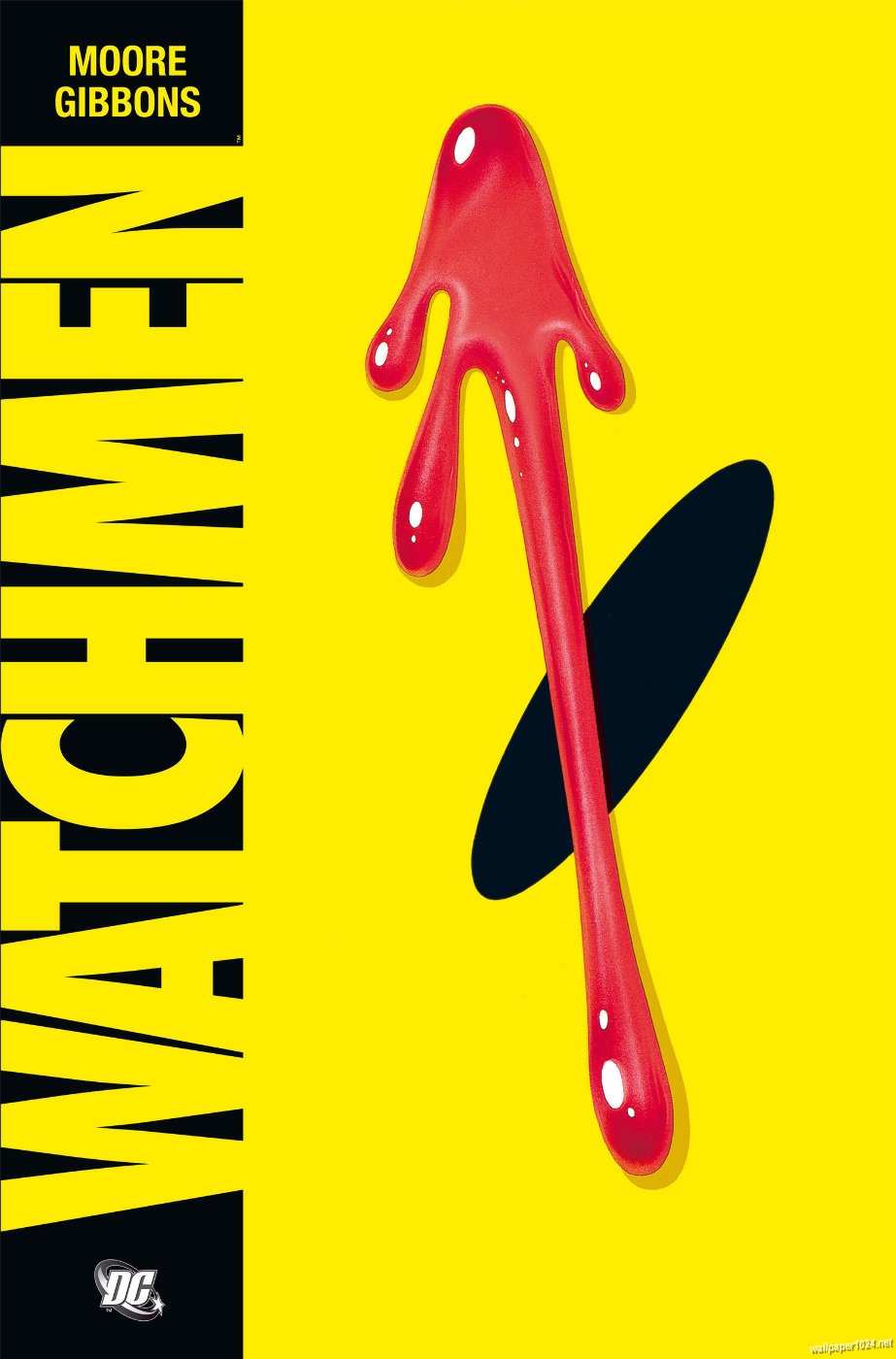
3) Watchmen, by Alan Moore (illustrated by Dave Gibbons)

“There is no future. There is no past. Do you see? Time is simultaneous, an intricately structured jewel that humans insist on viewing one edge at a time, when the whole design is visible in every facet.”
― Dr. Manhattan


Calling Watchmen "mind-blowing" doesn't do the book justice. That's barely scratching the surface of what this novel is, of what it does. Every single time I read this book, I stumble across some new insight, some new interpretation of the characters, their motivations, their inner workings. In eschewing the self-narrating thought bubbles of past comics artists, Alan Moore forces the reader to delve deep into complex and messy psychologies of these "real-world" superheroes, and the mechanisms which drive them to spend their nights dressing up in kinky, colorful skintight costumes and beating the stuffing out of petty criminals (which, if you think about it, is more than a little weird).

Moore also does an excellent job of pointing out that beating up random lawbreakers isn't going to solve anybody's problems in the long run. When Ozymandias (the self-styled"smartest man in the world") proposes taking action against a recurring villain who has just returned from prison, a bitter and cynical hero called The Comedian turns his acidic tongue on his fellow heroes, pointing out how ultimately pointless their nocturnal beatdowns are, in a world living in the looming shadow of the Cold War:

"You people are a joke. You hear Moloch's back in town, you think "Oh, boy! Let's gang up and bust him!" You think that matters? You think that solves anything? ... It don't matter squat because inside thirty years the nukes are gonna be flyin' like maybugs...and then Ozzy here is gonna be the smartest man on the cinder."


4) V for Vendetta, by Alan Moore (illustrated by David Lloyd)

"You're in a prison, Evey. You were born in a prison. You've been in a prison so long, you no longer believe there's a world outside. That's because you're afraid, Evey. You're afraid because you can feel freedom closing in upon you. You're afraid because freedom is terrifying. Don't back away from it, Evey. ... You faced the fear of your own death and you were calm and still. The door of the cage is open, Evey. All that you feel is the wind from outside.” 
― the anarchist known as "V"

I can't say that I agree with Alan Moore's politics, but they certainly make for thought-provoking reading material. I've never really read a coherent, well thought-out argument in favor of anarchy before or since, and some of the points that he brings up are pretty good ones. Governments always involve a loss of freedom on many levels, but these bodies to whom we hand over our liberties frequently do not have our best interests at heart. They're made of humans, who have their own interests at heart, as all humans inherently do. We tell ourselves that it's for our own good, that the alternative to government is chaos, etc., but ultimately, we're all free, all of the time, to do whatever we want. Most of us just choose not to, out of fear, uncertainty, the implicit or explicit threat of violence against our bodies and our families, etc. But the world only works that way because we allow it work that way.


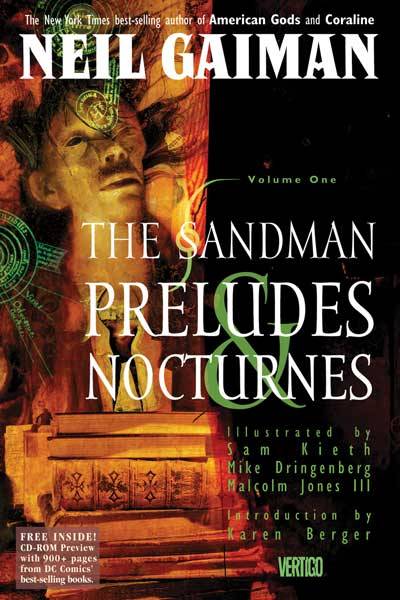
5) The Sandman, by Neil Gaiman (illustrated by various artists)


“Everybody has a secret world inside of them. All of the people in the whole world. I mean everybody. No matter how dull and boring they are on the outside, inside them they've all got unimaginable, magnificent, wonderful, stupid, amazing worlds. Not just one world. Hundreds of them. Thousands, maybe.”
― Barbie (a.k.a. Princess Barbara), "A Game of You"

What can I even say about this series? It might be the best thing I've ever read, in any medium. And that's really saying something, considering how much I've read in my life.

For the first few chapters, The Sandman is a pretty standard horror comic about Morpheus, the King of Dreams, trying to regain his kingdom after seventy years' imprisonment in the mortal realm. It's good; spooky and atmospheric, but not great; not yet. Not until the last chapter of the first volume, when Gaiman introduces the most endearing personification of Death herself that's ever been penned, and then shit starts to get weird (in the best possible way). Jumping between the Dreaming, the "real" world, the skerries of dream, Heaven, Hell, Limbo, Faerie, the Underworld, various historical pantheons (both real and invented, ancient and modern), and an innumerable host of stories, The Sandman is a shifting, shimmering phantasmagoria of images, words, and complete self-contained universes, each one stranger and more sublime than the last. Reading this series will forever alter the reader, because it forces one to question the nature of reality, time, of the primal power of storytelling to (sometimes literally) reshape one's world.

It is damn good stuff. You should go read it. Right now.


6) Scott Pilgrim, by Bryan Lee O’Malley

“I feel like im in this river just getting swept along... And if I hold on to anyone, if I'm holding on for dear life, I'm not getting anywhere. I'm stuck. ...I never wanted to get stuck.” 

―Scott Pilgrim, Scott Pilgrim's Finest Hour

Scott Pilgrim is a coming-of-age novel for the Nintendo Generation, and I really, really wish that someone had shown it to me before I came-of-age. I think that it would have made me a little more at-peace with being single, and maybe a little more willing to ask myself some hard questions about  my approach to the opposite sex.

In musicals, when emotion becomes too high onstage, the cast spontaneously bursts into song. Scott Pilgrim does something similar, only with video games instead of music. But behind the magical realism and plain old silliness, there's a lot of important questions about the baggage that each of us brings to a new relationship, and the ways in which our past romantic failures (whether they were our fault or not) makes it difficult, and sometimes impossible, to start afresh. But that's actually a good thing, because if you forget your past mistakes, you won't be able to learn from them, and you'll just keep making the same mistakes over and over again.


7) Persepolis: The Story of a Childhood, by Marjane Satrapi
 
“In life you'll meet a lot of jerks. If they hurt you, tell yourself that it's because they're stupid. That will help keep you from reacting to their cruelty. Because there is nothing worse than bitterness and vengeance... Always keep your dignity and be true to yourself.”

― Marjane Satrapi

I'm abashed to admit that I never really gave much thought to Iran before reading this book. I pretty much just swallowed what the news told me without question: Iranians were crazy zealots who fund terrorists and jihadis and other unpleasant men with beards, and all they want is to see America burn. How ignorant I was.

Not only was Iran a pretty nice place to live before the Islamic Revolution, women had more freedom in Iran than just about anywhere else in the region. Which made it all the harder for them to accept the veil, and the chaperone laws, and sending their sons and brothers off to become martyrs of their faith. Persepolis made me wary (or at least aware) of the possibility that even in a prosperous and stable country, a small band of violent extremists can waltz in, play off the public's fears, and really eff things up for everyone else.


Discuss: Which graphic novel(s) do you feel have the potential to change my life? Tell me about them in the comments!

Monday, August 23, 2010

Saga of the Swamp Thing

I just finished reading the first volume of Alan Moore's legendary 1980's run on the horror comic Swamp Thing.

God dammit. How can one man be good at everything? It's just not fair. Some authors get so married to their genre that they have to use a pseudonym to publish anything outside their area of expertise. But Alan Moore is equally at home writing superheroes, steampunk crossover orgies, post-apocalyptic political science thrillers, bizarre multidimensional examinations of culture and dreaming, existential nihilism, and pirate-comics-within-larger-comics. Hell, he's even a pretty good songwriter!

But I'm not complaining. Not really. I mean, it's a bit intimidating to know that there's someone as talented as him out there, but it's also comforting to know that it's possible to branch out after establishing oneself in publishing, and not be tied to one story for the rest of one's career.

And if it wasn't for Alan Moore, we wouldn't have so many awesome comics. I feel that he is part of a small group of comic-book writers (along with Neil Gaiman, Scott McCloud, Chris Ware, Art Spiegelman, et al.) who are recognized by mainstream critics as having real literary talent. The quality of their writing is so great that not even lit snobs can look down their noses at them without seeming openly hypocritical. They force the mainstream to evaluate their work on its merits as stories, not as "kiddie fare."


But anyway, getting back to Swamp Thing:

It's amazing. Simply surreal, yet simultaneously human. It feels as if Moore actually journeyed into the DCU and took case studies of humans mutated into plant-based life-forms before he set out to write this. I've never seen retconning done so well, so seamlessly. It doesn't just change the stories of the future; it turn the whole tale, from beginning to end, into an entirely different beast. It's like the big reveal at the end of The Usual Suspects: it forces you to go back and watch it again. (It feels a bit weird to talk about the shock-value of something published more than twenty years ago, but hey, it's news to me.)

And damn if he isn't a good horror writer too. Just let me say that I'm glad I read "A Time of Running", the last chapter of the book, in a well-lit room, on a night I was sleeping at my girlfriend's house. I don't know if i could've fallen asleep without someone in the bed next to me. That shit be creepy, son! It's amazing to me how, no matter how otherworldly the agents of fear may be in Moore's work, they always point us back to the fact that human beings are capable of much worse than even the vilest demon or most degenerate beast.

And that, is true horror.

Don't read it alone.